




If you have ever felt the rush of a well-timed bluff, online poker is going to feel like home — only bigger, faster, and available any time you want. Kuwaiti players are no longer casual participants, and this guide is built to help you compete seriously, covering everything from the basics to the strategies that actually separate winning players from the rest.
Top Online Poker Sites in Kuwait

Bonus up to
$3,500 + 200 FS

Bonus up to
5,000$

Bonus up to
$7,777 + 300 FS

Bonus up to
$20,000 + 500 FS

Bonus up to
$1,590 + 150 FS
How to Play Online Poker in Kuwait: A Step-by-Step Breakdown
Before you put a single chip on the table, you need to understand how a hand of poker actually flows. Most online poker games, especially Texas Hold’em which is the most popular format globally and in Kuwait, follow the same seven-step structure from start to finish. Master this, and you have the foundation for everything else.
Understand the Goal
Win the pot — either by holding the strongest hand at showdown, or by applying enough pressure that everyone else folds. Poker is not just about the cards you hold. It is about making your opponents believe you hold something better than you do, and knowing when to walk away.
The Blinds Start the Action
Two players post mandatory bets — the small blind and the big blind — before any cards are dealt. These forced bets exist to create action. Think of the blinds as the entry fee for that hand. The small blind is typically half the big blind.
Your Hole Cards Arrive
Each player receives two private cards face-down, known as hole cards. These are yours and yours alone — no one else sees them. Are these cards worth playing? What position are you sitting in? These two questions determine your next move.
Pre-Flop Betting
Starting from the player left of the big blind, every player decides: fold, call, or raise. This is your first major strategic decision. Experienced Kuwaiti players already know at this stage whether they will play aggressively or cautiously based on their cards and position at the table.
The Flop
Three community cards are placed face-up on the table, shared by all players still in the hand. You combine these with your hole cards to form your best five-card hand. A betting round follows. Strong players know when to bet, when to check, and when to let a hand go.
The Turn
A fourth community card is revealed. Your hand is becoming clearer now. The range of possible outcomes narrows and bets tend to get larger. If you were ahead on the flop, the turn usually confirms it. If you were chasing a draw, you now have one card left to complete it.
The River
The fifth and final community card hits the table. No more cards are coming. One last betting round takes place here. The psychological pressure of the river is something every Kuwaiti player must learn to handle. Some bluff with nothing. Others value-bet confidently. The best players know which to do and when.
The Showdown
If two or more players remain after the final bet, everyone reveals their hole cards. The software identifies the best five-card combination from each player’s cards and the board. The strongest hand takes the pot. If hands are equal, the pot is split equally between the tied players.
Poker Variations Available to Kuwaiti Players
Not all online poker is the same. While Texas Hold’em dominates the scene globally and in Kuwait, there are other formats that offer a different pace, different strategy, and different levels of excitement. Here are the top three you should know.
Texas Hold’em — The King of Poker
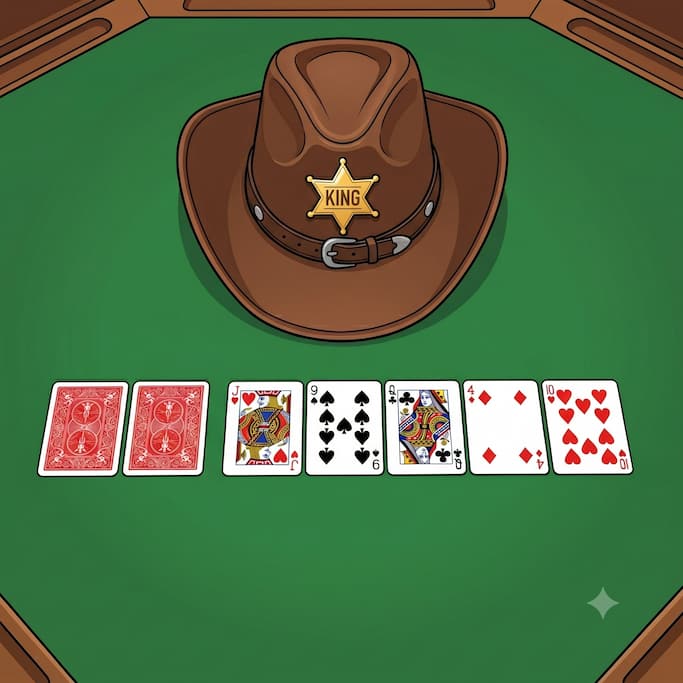
Texas Hold’em is where every Kuwaiti poker player begins. It is the most widely played format in the world, featured at the World Series of Poker and on every major online platform. Two hole cards, five community cards shared at the table, and betting across four rounds: pre-flop, flop, turn, and river. The rules take minutes to learn — mastering them takes years.
- Key Skill: Board reading, position awareness, and pot management
- Best for: All levels, from beginners to serious competitors
- Difficulty: Intermediate — easy to start, deep to master
Omaha — More Cards, More Action
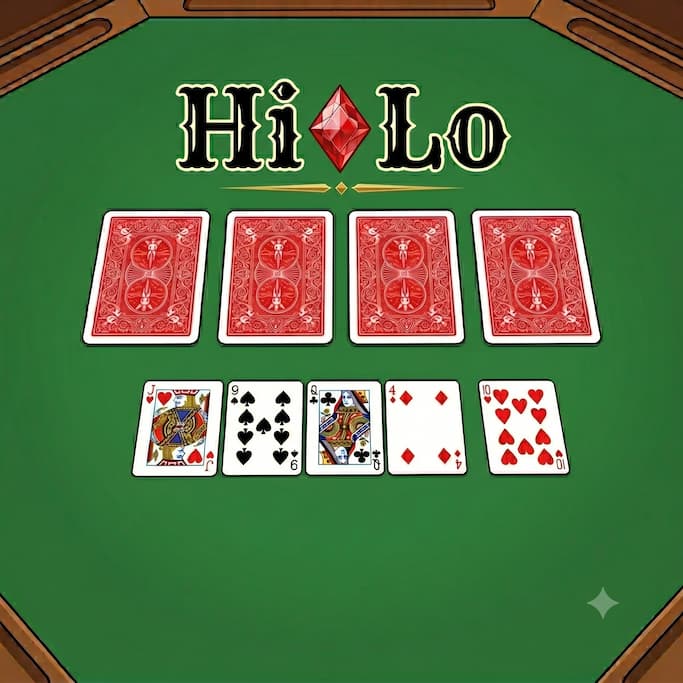
Omaha follows the same structure as Hold’em but deals each player four hole cards instead of two. The rule: you must use exactly two of your hole cards and exactly three community cards to build your hand. This one change makes pots larger, hands stronger, and decisions more complex. If you enjoy math and thinking several steps ahead, Omaha is your next move.
- Key Skill: Mathematical thinking and wide-range hand reading
- Best for: Intermediate to advanced players chasing bigger pots
- Difficulty: Complex — four hole cards create far more hand combinations
7-Card Stud — The Classic
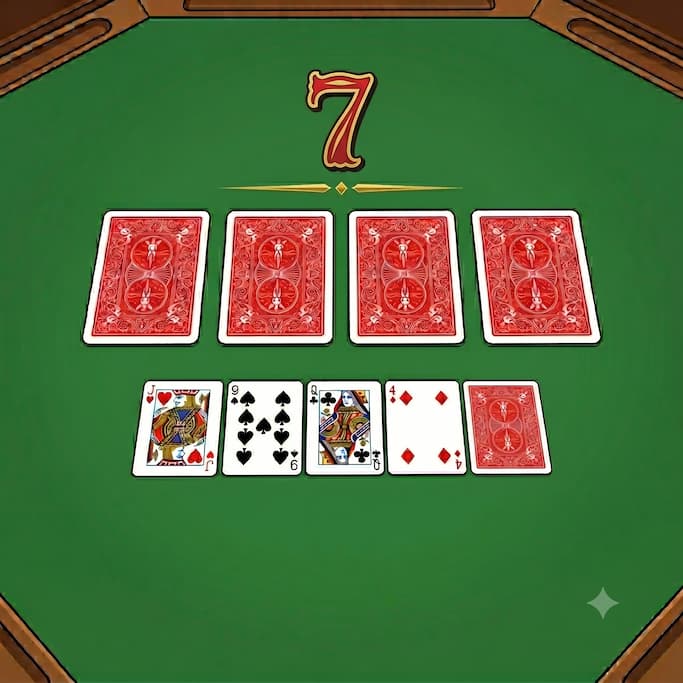
Before Hold’em took over, 7-Card Stud ruled the casino floor. There are no community cards here — each player builds their hand from their own seven cards, some face-down and some visible to everyone. Tracking which cards have been folded is what separates good Stud players from great ones.
- Key Skill: Memory, tracking exposed cards, and reading visible opponent hands
- Best for: Observant players who enjoy a slower, methodical casino game
- Difficulty: Intermediate to advanced — no shared cards means every decision stands alone
Poker Strategies and Types of Players
Here is where many Kuwaiti players separate themselves from the competition. You can know the rules perfectly and still lose consistently if you have no poker strategy. Understanding your own playing style — and more importantly, identifying your opponents’ playing styles — is what turns a losing player into a profitable one.
The Tight-Aggressive Player (TAG)

The TAG strategy is the most recommended starting point for Kuwaiti players who are serious about improving. A TAG player folds the vast majority of hands — around 80% — and only enters a pot with strong cards. When a TAG does play, they play aggressively: raising, betting, and applying pressure rather than passively calling.
The beauty of TAG is its simplicity and reliability. You are not making complex decisions with weak hands. You are waiting for spots where you have a clear advantage and then maximizing the value of those spots. This style works consistently at low and medium stakes, and it builds the disciplined foundation that every advanced player needs before moving on to more complex approaches.
How to beat a TAG: steal their blinds when in a late position, re-raise them from the button even if they open from early position, and raise their continuation bets on dry boards. They are predictable, and predictability is always exploitable.
The Loose-Aggressive Player (LAG)

The LAG strategy is for experienced Kuwaiti players who have already internalized the fundamentals and want to evolve. A LAG plays a wide range of hands, applies constant pressure through aggressive betting and raising, bluffs frequently, and keeps opponents guessing at all times.
This style is powerful because it is difficult to read. When a LAG raises, it could be with pocket aces or with 6-5 suited. That uncertainty forces opponents into uncomfortable decisions. However, playing LAG profitably requires excellent post-flop skills, a strong ability to read opponents, and the discipline to recognize when your bluffs are being called. In the wrong hands, it leads to large losses.
How to beat a LAG: tighten your range to premium hands, slow-play strong hands to trap them, and call their bets when you have a decent hand because they bluff frequently.
The Nit

The Nit is the ultra-tight, ultra-passive player who only plays premium hands and almost never bluffs. They are patient to a fault, folding repeatedly while waiting for the perfect spot. When a Nit finally bets or raises, you can be almost certain they have a very strong hand.
Nits are safe players who avoid big losses but also miss a significant amount of value. They are easy to exploit: steal their blinds relentlessly, re-raise them liberally, and fold immediately when they show unexpected aggression.
The Maniac

The Maniac is the chaotic force at the poker table — raising and re-raising with almost any two cards, bluffing constantly, and creating large pots regardless of hand strength. Maniacs are not skilled players in most cases; they rely on overwhelming aggression to force folds and occasionally get lucky.
The correct response to a Maniac is to tighten your range, let them do the betting, and call down with strong hands. Do not try to bluff them — they will call. Instead, let them walk into your strong hands and pay you off.
The Calling Station

The Calling Station calls almost every bet regardless of their hand strength. They almost never fold, which means bluffing against them is completely pointless. However, they are goldmines for value betting — any time you have a strong hand, bet into a Calling Station and they will often pay you off with a much weaker hand.
The key against Calling Stations is simple: stop bluffing and start value betting. Even medium-strength hands become profitable to bet when you know your opponent will call with worse.
The GTO Wizard

At the elite level of poker, some players approach Game Theory Optimal (GTO) play. This means making decisions based on mathematically balanced strategies that are theoretically unexploitable. A GTO Wizard mixes bluffs and value bets in precise proportions, uses balanced ranges across all positions, and makes it nearly impossible for opponents to gain an edge through pure strategy.
For Kuwaiti players still developing their game, GTO is a long-term goal rather than a starting point. However, understanding the concept helps you recognize when an opponent is playing a balanced game and adjust your approach accordingly. Even GTO players are human — they deviate, they tilt, and they have tells. Watch carefully enough and you will find them.
Conclusion: Online Poker in Kuwait Is a Skill Worth Developing
Online poker in Kuwait is more accessible than it has ever been. The online casinos are better, the game selection is broader, and the resources available to Kuwaiti players — like this guide — make it easier than ever to go from complete beginner to competent, strategic player.
But here is what every poker pro will tell you: the game never fully teaches you everything at once. It reveals itself in layers. You start by understanding the rules and hand rankings. Then you develop positional awareness. Then you start reading opponents. Then you build a strategy. Then you refine it. The players who succeed at online poker in Kuwait are not necessarily the most naturally talented — they are the ones who put in the work consistently and approach every session as a chance to improve.
Start at the free tables. Move to small stakes real money when you are ready. Study your sessions. Identify your leaks. Know what type of player you are and what type of player you are sitting against. Use your position. Protect your bankroll. And above all, stay patient — poker rewards discipline more than anything else.
Kuwait’s poker scene is growing. The question is whether you are going to grow with it.
FAQs About Online Poker in Kuwait
Start with the Tight-Aggressive (TAG) approach — fold most hands and only play strong cards like pocket aces, pocket kings, or ace-king. When you do play, bet aggressively. This limits your exposure to tough spots while maximising value from strong hands. It is the safest and most profitable style for players still learning the game.
In Hold’em, you get two hole cards and use up to five community cards to make your best hand. In Omaha, you get four hole cards but must use exactly two of them with exactly three community cards. This one rule means stronger hands, larger pots, and more complex decisions. Most Kuwaiti players start with Hold’em and move to Omaha once their fundamentals are solid.
Position is one of the most critical concepts in poker. Acting after your opponents — especially from the button seat — means you see their decisions before making your own. This lets you bluff more effectively, control pot sizes, and make better calls and folds. Many experienced players will tell you position matters more than the cards you are dealt.
Yes, but only when used selectively. Bluffing works best on dry boards, against tight opponents who are capable of folding, and when your betting tells a believable story from the start. Bluffing against calling stations or maniacs is almost always a losing play. Read your opponent type first — then decide if the situation genuinely supports a bluff.
Absolutely. Many platforms offer free play-money games where no registration or deposit is needed. Free poker is a great training ground for building confidence and mechanics. Just keep in mind that real-money games feel different — opponents play tighter when real chips are on the line. Use free games to learn, then move to low stakes when you feel ready.
Poker hands are five-card combinations that determine the winner at showdown. From strongest to weakest: Royal Flush, Straight Flush, Four of a Kind, Full House, Flush, Straight, Three of a Kind, Two Pair, and One Pair. The Royal Flush — A-K-Q-J-10 of the same suit — is unbeatable. If no combination is made, the player with the highest card wins, with the Ace ranking highest.